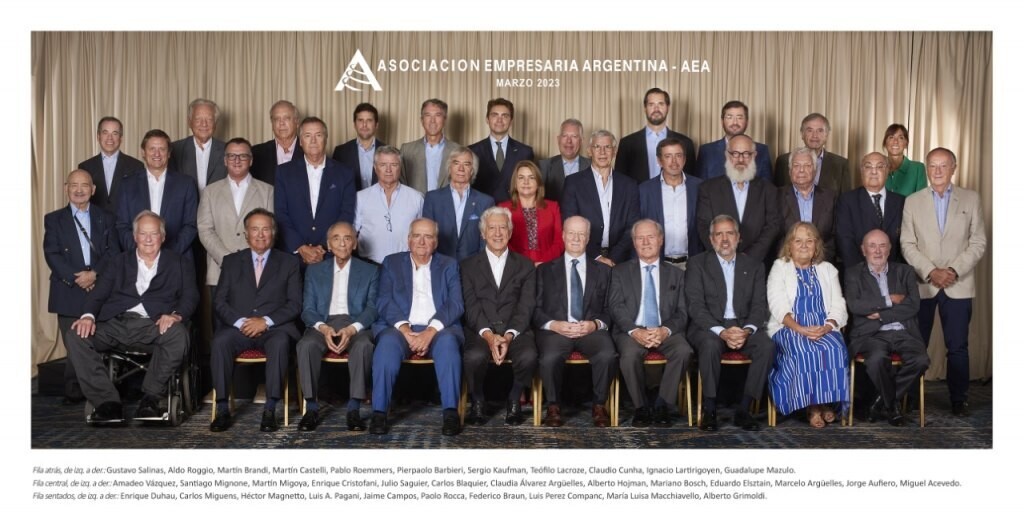
Buenos Aires, Dec 17 (NA) -- The Argentine Business Association (AEA) backed the economic course being led by President Javier Milei, highlighting the drop in inflation, fiscal adjustment, and progress in reducing tax pressure. According to the Argentine News Agency (NA), AEA held its year-end dinner where Central Bank (BCRA) President Santiago Bausili was an invited guest. "In this new stage, it will be necessary to advance with a set of policies aimed at fostering the competitiveness of the economy. Official initiatives regarding reforms in the labor and tax fields clearly have that objective," the entity that brings together the country's most important companies stated in a press release. In this regard, AEA indicated that "it would be necessary to add to a productive dialogue with the private sector, measures related to the primary, industrial, and commercial sectors of the economy." During the year-end dinner, the head of the Central Bank focused his speech on the BCRA's guidelines—reducing inflation and growing the economy—as well as the importance of providing predictability. Bausili was accompanied by Central Bank Director Pedro Inchauspe. "He also highlighted the importance of the private sector increasing productive investments, which will result in greater capital inflow, increased production, and a rise in exports," AEA stated in its press release. Santiago Bausili: "We buy more dollars than any other administration." A few days ago, the head of the BCRA held a press conference where he referred to the new monetary policy scheme that the financial entity will implement starting in 2026. Among these, the updating of exchange rate bands, which will be adjusted for inflation, and the "consistent accumulation program" to achieve a greater flow of foreign currency stand out.